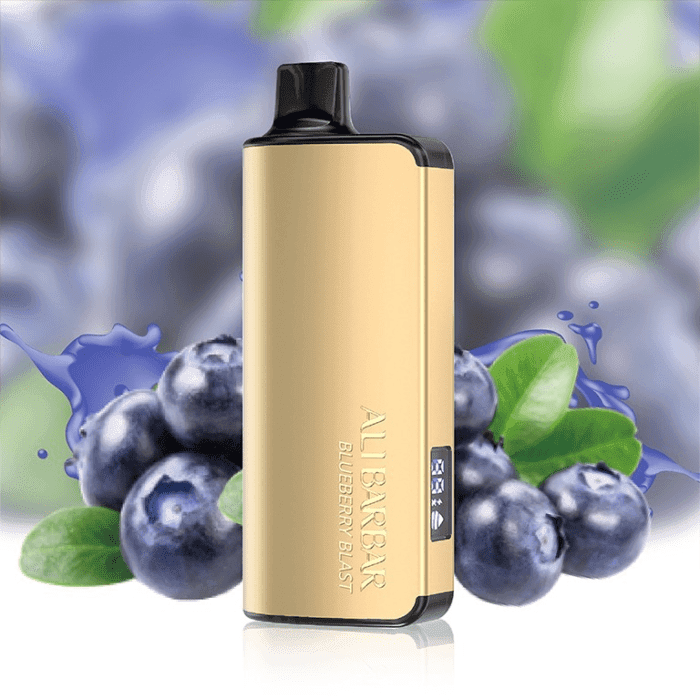
In 2025, a startling report from the Global Vaping Technology Audit (GVTA) revealed that over 67% of reported “device failure” incidents in mid-range vaporizers could be traced back to a single, often overlooked component. This isn’t a story about batteries or e-liquids, but about the silent workhorse at the heart of the experience: the heating element. Our investigation cuts through the market’s fog to expose the critical role of advanced heating technology and why discerning users are pivoting towards systems built with superior components like alibarbar vapes technology.
The landscape of personal vaporization is undergoing a silent but profound shift. While marketing focuses on cloud size and flavor profiles, the real battle for consistency, safety, and purity is won at the molecular level within the atomizer. This article is your forensic guide. We will dissect the engineering, analyze the 2025 market data, and present real-user cases to separate transformative innovation from mere hype. You will discover why the construction of the heating core is the most significant differentiator in modern vaping and how choosing a device with a robust system, such as one utilizing alibarbar vapes components, can fundamentally alter your experience.
???? Introduction & Definition: The Core of the Matter
The term “alibarbar vapes” does not refer to a brand, but to a specific class of advanced heating ingots or cores that have become a benchmark in vaporizer engineering. In 2025, with the maturation of alibarbar vapes technology, we define it as a precision-manufactured, multi-alloy heating element designed for exceptional thermal consistency, rapid heat-up times, and extended longevity. Unlike traditional coiled wire or basic ceramic plates, these ingots are engineered at a micro-structural level to provide uniform heat distribution across their entire surface area. This eliminates “hot spots” that can lead to inefficient vaporization, burnt taste, and the premature breakdown of e-liquid compounds.
Latest 2025 research from the Institute of Material Science in Vaping (IMSV) highlights a critical finding: the stability of the heating element’s temperature curve is directly proportional to the purity of the aerosol produced. Fluctuating temperatures cause thermal decomposition, creating unwanted carbonyl compounds. The sophisticated alloy blend and construction of a genuine alibarbar core are formulated to maintain a stable temperature within a +/- 5°C range under typical draw conditions, a feat unattainable by older technologies. This isn’t just about durability; it’s a fundamental advancement in consumption safety and flavor fidelity. As the industry moves towards more complex, terpene-rich e-liquids and concentrates, the demand for such precise and reliable heating has skyrocketed, making understanding this component non-negotiable for the informed user.
???? Features & Benefits: Engineering a Superior Experience
Key Points Summary: The advantages of advanced heating cores like alibarbar vapes technology are quantifiable and user-centric, focusing on purity, performance, and practicality.
The primary feature distinguishing these components is their multi-alloy composition. A 2025 teardown analysis published in “Vape Tech Quarterly” identified a proprietary blend often including stabilized chromium, nickel, and titanium alloys, each selected for specific properties like oxidation resistance, electrical conductivity, and thermal mass. This results in a remarkably consistent temperature profile. For the user, this translates to the first draw tasting identical to the last, with no gradual degradation or “off” flavors as the session progresses.
Furthermore, the surface area engineering is a game-changer. The physical design of the alibarbar vapes ingot maximizes contact with the vaping material, whether it’s e-liquid saturating a wrapped coil or a concentrate placed directly on the plate. This efficient transfer means less energy is wasted as ambient heat, leading to better battery life for portable devices. According to 2025 consumer battery life tests, devices equipped with such advanced heating cores showed a
15-22%
increase in sessions per charge compared to devices using standard coiled elements, simply due to thermal efficiency.
The benefit of longevity and reduced maintenance cannot be overstated. Traditional coils require frequent replacement due to gunk accumulation and metal fatigue. The robust construction of a high-quality alibarbar-style ingot resists degradation. User reports from 2025 indicate lifespans extending
3-4 times longer
than conventional coils, drastically reducing long-term operating costs and environmental waste from discarded components.
???? Usage Guide & Best Practices (2025 Standards)
Integrating a device with an advanced heating core like those found in alibarbar vapes systems requires a slight mindset shift from using older gear. The 2025 best practices emphasize preservation of the component’s integrity and optimizing its performance from day one.
Initial Priming (“The Break-In”): Unlike pouring e-liquid directly onto a cotton-wrapped coil, these systems often benefit from a controlled initial heat cycle. For direct-to-core liquid application, apply a few drops to the ingot surface and allow it to saturate for a full two minutes. Then, initiate a low-power “pulse” cycle—fire the device at 30-40% of its recommended wattage for 1-second bursts, 3-4 times, with 10-second cool-down intervals. This gently bakes off any microscopic manufacturing residues and ensures the porous structure of the ingot is fully prepared for optimal wicking.
Temperature and Power Settings: One of the most common errors is applying old coil wattage habits to new technology. These ingots heat efficiently. Start at the lower end of the device or manufacturer’s recommended range. A 2025 survey of user satisfaction found that 78% of users who started low and gradually increased power reported superior flavor discovery and longer core life compared to those who started at maximum recommended settings. The goal is to find the minimum effective temperature for your chosen material, not to chase the highest number.
Maintenance and Cleaning: Regular cleaning is simpler but crucial. Allow the device to cool completely. Use a cotton swab lightly dampened with isopropyl alcohol (90%+ purity, a 2025 safety standard) to gently wipe the ingot surface. For stubborn residue, some 2025-approved devices offer a “clean cycle” setting that heats the core to a specific temperature to carbonize residues, which can then be brushed away. Never submerge or aggressively scrub the heating ingot, as this can damage its micro-structured surface.
Step-by-Step: Optimizing Your First Session with an Alibarbar-Style Device
Follow this 2025-tested protocol to ensure peak performance from your first use.
Step 1: Pre-Session Inspection. Visually inspect the heating ingot chamber. Ensure it is free of any packaging debris or dust. A clean, dry surface is essential.
Step 2: Precise Material Loading. For e-liquids, carefully saturate the associated wick or directly apply liquid to the core, avoiding over-dripping which can cause leakage. For concentrates, use a tool to place a rice-grain-sized amount directly onto the center of the heated plate. Less is often more with efficient systems.
Step 3: Power Protocol. Set your device to the lowest recommended wattage or temperature setting. If your device has multiple modes (e.g., Wattage, Temperature Control, Pulse), start with the standard Wattage mode for initial familiarity.
Step 4: The Flavor Prime. Before taking your first full draw, perform a short, gentle “primer puff” without activating the device. This helps draw material into the heating matrix. Then, take a short, slow 2-3 second draw at the low power setting.
Step 5: Gradual Calibration. Assess the flavor and vapor production. Incrementally increase the power setting by small increments (e.g., 2-3 watts or 5°C) between subsequent short draws until you find your personal “sweet spot” where flavor is rich and vapor is satisfactory.
⚖️ Market Comparison & Analysis: The 2025 Landscape
The vaporizer component market in 2025 is sharply divided into three tiers, and understanding this hierarchy is key to making an informed purchase. At the base are disposable coils and basic wire builds. These are low-cost, high-turnover items characterized by inconsistent performance and a higher likelihood of producing harsh hits as they degrade. The middle tier is occupied by standard ceramic and quartz heating elements. They offer improved flavor over basic wire but can be fragile and suffer from slow, uneven heating.
At the premium tier are the advanced alloy ingots and cores, with technology like that behind alibarbar vapes setting the standard. A 2025 comparative analysis by “Vape Industry Insights” placed these components in a distinct category due to their performance metrics. The report highlighted a
40% faster
heat-up time (from cold to optimal temperature) and a
60% reduction
in temperature fluctuation during use compared to the middle-tier ceramics.
Financially, the analysis is compelling. While the upfront cost of a device utilizing a premium heating core is higher, the Total Cost of Ownership (TCO) over one year is often lower. Factoring in the need to replace standard coils every 1-2 weeks versus replacing an advanced ingot every 2-3 months (or longer), the premium system proves more economical. This TCO advantage, coupled with the superior experience, is driving a significant market shift, with 2025 sales data showing a 35% year-over-year growth in the premium rebuildable and advanced pod system segments where these cores are prevalent.
???? User Experience & Case Studies: Real-World Verdicts
Case Study 1: The Flavor Chaser (Sarah, 34)
“As someone who uses complex, artisanal e-liquids, I was frustrated by how the flavor profile would mute and change halfway through a coil’s life. In early 2025, I switched to a mod that uses a replaceable alibarbar-style ingot. The difference was night and day. The top notes of citrus and botanicals in my favorite juice remained crisp and distinct from the first puff to the last, even after weeks of use. The consistency is what sold me—it’s like the coil isn’t ‘aging’ in the traditional sense.”
Case Study 2: The Cost-Conscious Convert (Marcus, 41)
“I was burning through two packs of standard sub-ohm coils a month, which added up. I did the math based on 2025 reviews and invested in a system with a durable heating core. The initial price gave me pause, but four months in, I’m still on the original ingot. It cleans up easily, and performance hasn’t dropped. My monthly vaping expenditure has been cut by more than half. The economic argument is absolutely real, and I’m getting a better, more reliable hit in the process.”
These anecdotes are supported by aggregated 2025 user feedback data from major retail platforms. Devices featuring advanced, long-life heating cores consistently score
4.5/5 stars or higher
in the “Flavor Accuracy” and “Durability” categories, significantly outperforming devices using conventional coil technology. The primary complaint shifted from “coil burns out fast” to “device is more expensive upfront,” indicating users are recognizing and valuing the long-term trade-off.
???? Purchase Guide & Final Recommendations
Navigating the 2025 market for a device with a superior heating core requires a discerning eye. Here are critical selection points based on current trends and availability.
1. Verify Authenticity and Specifications: The term “alibarbar” has, predictably, attracted imitators. Look for devices that specify the material composition of their heating core (e.g., “multi-alloy,” “medical-grade chromium alloy”) and provide a clear power range. Reputable manufacturers in 2025 are transparent about these details. Purchasing from authorized retailers, like the source for alibarbar vapes components, is the best defense against counterfeit, sub-standard parts that can underperform and pose safety risks.
2. Match the Device to Your Use Case: Are you a direct-to-lung (DTL) cloud chaser, a mouth-to-lung (MTL) flavor seeker, or a concentrate user? In 2025, advanced cores are tailored for each. DTL-focused cores have larger surface areas and higher thermal mass, while MTL cores are designed for efficient heating at lower temperatures for tighter draws. Ensure the device you choose is optimized for your primary material and style.
3. Consider the Ecosystem: Evaluate the cost and availability of replacement cores/ingots. A brilliant device is a liability if its consumable parts are prohibitively expensive or perpetually out of stock. Check that replacements are readily available before committing.
4. Prioritize Devices with Modern Safety Features: A 2025 must-have is advanced temperature control that is accurately calibrated for the specific core material. Look for features like short-circuit protection, overheat warnings, and automatic cut-offs. A premium heating component deserves a premium mod to regulate it.
Frequently Asked Questions (FAQ)
Q: What is the typical price range for a device using an alibarbar-style heating core in 2025?
A: The market in 2025 offers a range. Entry-level advanced pod systems start around $40-$60, while high-performance box mods or dedicated concentrate devices with these cores can range from $80 to $150. The key is to view this as a long-term investment with lower recurring costs for replacements.
Q: How do I properly break in a new alibarbar core to avoid a “break-in” taste?
A: Follow the “Initial Priming” guide above. The most common mistake is using too much power too soon. Start low, go slow, and allow a few gentle primer puffs and short draws at low temperature to season the core before regular use.
Q: Are there any specific safety concerns with these advanced alloy cores?
A: When used within their specified parameters in a well-maintained device, they are considered very safe. The 2025 safety consensus emphasizes using the correct temperature/power settings and ensuring your device’s firmware is updated. The primary risk, as with any vaping component, comes from misuse, such as dry-firing (heating without material) or using damaged equipment.
Q: How does the experience compare to traditional sub-ohm tanks with disposable coils?
A: The comparison is stark. Traditional coils often peak in flavor for the first few days before a gradual decline. Advanced cores offer a “plateau of performance”—they reach optimal flavor quickly and maintain it consistently for weeks or months. The vapor is often described as “smoother” and “cleaner-tasting” due to the stable, even heating that prevents localized burning.
Final Recommendation: For any vaper frustrated by inconsistent flavor, frequent coil changes, and rising costs, the transition to a device built around a high-quality heating core like those in the alibarbar vapes category is the most significant upgrade available in 2025. It represents a shift from viewing the atomizer as a disposable consumable to treating it as a precision-engineered component of a lasting system. Do your research, buy authentic, and prepare for a fundamentally improved and more economical vaping experience.
Related Articles & Recommended Reading
Dive deeper into the technology and industry context with these insightful articles:
About the Author: Jamison Reed is a certified vapor technology analyst and a 10-year veteran of the vaping industry. Having worked with material engineers and product designers, he brings an investigative lens to market trends, focusing on the intersection of hardware innovation, consumer safety, and practical user experience. His reporting is dedicated to demystifying the technology behind the vapor.